
 Share
Share
 Post
Post
 Email
Email
 Share
Share
 Share
Share
 Share
Share




نبذة عن الندوة
منذ عام 2022، شكلّت الندوة العالمية حول العنف القائم على النوع الاجتماعي المُيسَّر بالتكنولوجيا أبرز ملتقى عالمي يستضيفه صندوق الأمم المتحدة للسكان (UNFPA)، حيث تجتمع الحكومات ومنظمات المجتمع المدني ومقدمي خدمات الخطوط الأمامية والباحثين والمدافعين عن الحقوق الرقمية وشركات التكنولوجيا وشركاء الأمم المتحدة لمعالجة هذا الانتهاك المتسارع لحقوق الإنسان.
وستُعقد الندوة الرابعة في الفترة من 4 إلى 5 مارس/آذار 2026 بالشراكة بين صندوق الأمم المتحدة للسكان و Global Affairs Canada و Association for Progressive Communications.
توفّر الندوة فضاءً موثوقًا للتقييم وتبادل المعرفة وتحفيز العمل الجماعي في مرحلة تزداد فيها الحاجة إلى ذلك. وتتجاوز الندوة العالمية الرابعة حول العنف القائم على النوع الاجتماعي المُيسَّر بالتكنولوجيا مجرد توصيف حجم الظاهرة، لتسلّط الضوء على الممارسات الواعدة والاستراتيجيات العملية التي تعزّز استجابات شاملة ومتمحورة حول الناجيات والناجين، إلى جانب جهود الوقاية وآليات المساءلة، بما يسهم في التصدي لهذا الشكل من العنف في سياقات عالمية متنوّعة.
ما الذي يمكن توقعه؟
تركيز واضح على الانتقال من التحليل إلى التطبيق العملي
جلسات تفاعلية وورش عمل متخصصة
عروض عملية تستند إلى دراسات حالة
وجهات نظر عالمية وتبادل خبرات بين القطاعات المختلفة
نقاشات معمّقة حول القضايا الراهنة والناشئة
سيتم الإعلان عن جدول الأعمال قريباً!
March
16:00المشرفون: سيسيليا ماوندو (بودكاست دادا الرقمي) ولولو باريرا (فوندو سيميلاس)
_1772094929459.jpg)
Derechos Digitales
Derechos Digitales
Paloma Lara Castro, Policy Director at Derechos Digitales, is a lawyer and a master's candidate in International Human Rights Law at the University of Buenos Aires (UBA). Her work focuses on processes related to the universal and inter-American systems, content production, and policy analysis at the regional and global levels. She also monitors issues related to gender and technology.
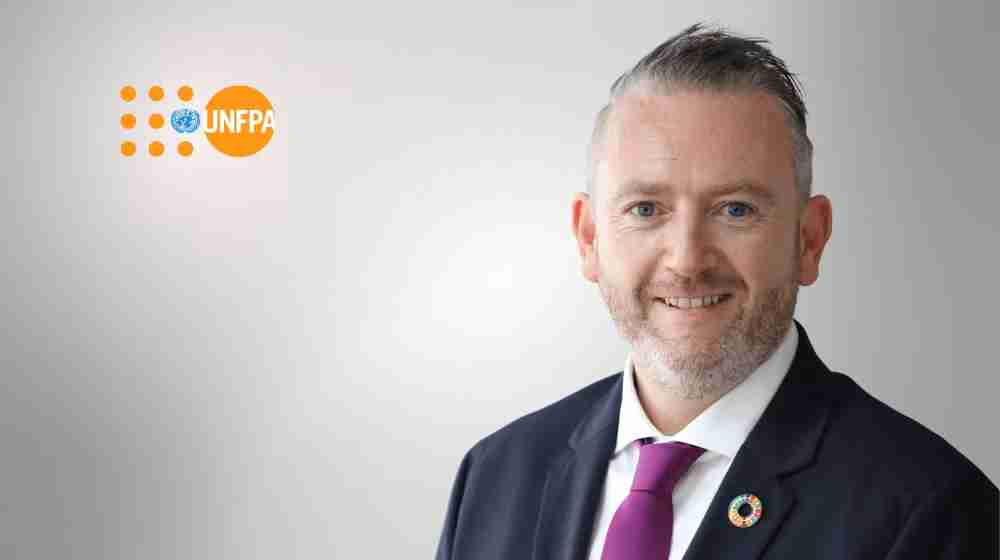
Assistant Secretary-General and Deputy Executive Director - Programme (DED-P) ad interim, UNFPA
Assistant Secretary-General and Deputy Executive Director - Programme (DED-P) ad interim, UNFPA
_1771918303584.png)
Euki App
Euki App
Ana Ramirez (she/her) is the co-founder and Executive Director of Euki, a tech nonprofit that co-creates digital tools with and for communities facing the greatest barriers to sexual and reproductive healthcare. Before co-founding Euki, she worked as a social science researcher on the topics of abortion, menstruation, and HIV and AIDS in the US and globally. She has published her work in academic journals and presented at academic and tech conferences around the globe. Ana is committed to helping build a world where everyone has private, secure access to resources that empower them to live safe, healthy, pleasurable lives.
_1771918998679.png)
Equilabs
Equilabs
Luísa Franco Machado is an award-winning digital rights advocate and founder of EquiLabs, a youth-led digital rights lab reimagining data and AI governance with an intersectional lens. They have shaped AI and data policy at the UN, GIZ, OECD.AI, and governments across the world, often as the only dissident voice of those spaces. As a UN-appointed Young Leader for the SDGs, she has been recognized by the UN as a key activist for digital rights and AI justice globally. Their work as an activist and thought leader has earned global recognition, including being named a Rising Star on Apolitical's Government AI 100 2025, Future Minds’ 25 Under 25, and ISOC’s Internet Governance Under 30.
_1771922659192.jpeg)
Tattle
Tattle
Tarunima Prabhakar is a technologist and a policy researcher invested in building more just and equitable digital spaces through cross-disciplinary collaborations. She is the co-founder of Tattle, an organization that builds technologies and datasets to amplify civic responses to online harms such as misinformation and online gendered abuse.
At Tattle, she leads strategy and research. In all her work she attempts to build on feminist critiques of dominant technology paradigms to create infrastructures and digital spaces centered in care. She is a non-resident Fellow at the Centre for Responsible AI, IIT Madras. She was previously a non-resident fellow at Carnegie India and at the Center for Long-Term Cybersecurity at UC, Berkeley. She has worked on award winning Tech for Good projects with non profits and tech companies.
_1771918334143.jpg)
UNDP
UNDP
Ken Otieno is a GBV specialist with 15+ years’ humanitarian and development experience across Africa and the Middle East. With GBV leadership roles at UNFPA and UNDP, Ken has led multi-agency responses in complex and displacement settings, including with the IRC, IMC and DRC bringing strategic, technical and multisectoral expertise to technology-facilitated GBV in humanitarian contexts.
Feminist Internet Research Network
Feminist Internet Research Network
Dr Tigist Shewarega Hussen works in the Women’s Rights Program (WRP) at the Association for Progressive Communication (APC). She is the research lead and coordinator for the Feminist Internet Research Network (FIRN) project. Dr Hussen is also a Practitioner in Residence at the Centre for Information Integrity in Africa (CINIA) at Stellenbosch University. Her ongoing research explores the ethical implications of artificial intelligence (AI) from a decolonial feminist and pan-African perspective.
_1771921159188.jpeg)
University of Haifa
University of Haifa
Afnan Kanaaneh is a master’s student in Communication Studies at the University of Haifa and a former teaching assistant in the department. Her research interests lie at the intersections of media, language, power, translation, gender, nationalism, technology, and globalization. She seeks to bridge research and activism through collaboration with local Palestinian human rights organizations inside the Green Line — including Mada-Alcarmel, Assiwar, 7amelh, I'lam, and Adalah. Her work involves conducting, writing, and publishing field-based research, policy papers, materials, and campaigns addressing technology-facilitated gender-based violence, surveillance, online repression against Palestinians, visual violence, children’s and youth digital safety in conflict and humanitarian settings, and the conditions, practices, and suppression of Palestinian journalistic work under systems of control.
_1771918585013.jpeg)
Digihub Africa
Digihub Africa
Muderhwa Seraphin Mushagalusa (he/him) is a digital rights advocate, author, and social innovator dedicated to building safer and more inclusive digital societies, particularly in fragile and conflict-affected contexts. He is the Executive Director and Co-Founder of Digihub Africa, a South Africa–based non-profit advancing digital inclusion, online safety, and ethical digital transformation across the African continent.
Muderhwa serves as Co-Chair of the Christchurch Call Advisory Network, a New Zealand–based advisory body established following the 2019 Christchurch attacks by the Governments of New Zealand and France to advance coordinated global action against terrorist and violent extremist content online.
His work focuses on combating misinformation, online hate, and digital harm in fragile and conflict-affected environments. He is also the author of “Safari: A Journey Through Fire and Hope”, which explores resilience in communities shaped by conflict, weaving together themes of displacement, dignity, and hope through storytelling.
_1772094560013.jpeg)
Digital Rights Foundation
Digital Rights Foundation
Nighat Dad is a Pakistani lawyer and the founder of Digital Rights Foundation, an NGO focused on cyber harassment, data protection and free speech online in Pakistan and South Asia. As a feminist and pioneer for women’s rights activism in Pakistan, Dad has raised awareness of Pakistani patriarchy and illuminated her own experience as a woman engaged in digital rights activism. She is also an inaugural member of the Oversight Board, which since 2020 has been working to better protect freedom of expression on Meta’s platforms by making principled, independent decisions about important pieces of content. Her accomplishments include being named a Next Generation Leader by Time Magazine in 2015, the Dutch Human Rights Tulip Award in 2016, a TED Global Fellowship in 2017 and nomination as a Young Global Leader by World Economic Forum in 2018, as well as being listed among 2019’s 21 Young Leaders from Asia by Asia Society.
_1772092772816.jpg)
Activist, writer, speaker & journalist, -
Activist, writer, speaker & journalist, -
Laura Bates is the founder of the Everyday Sexism Project, an ever-increasing collection of over 200,000 testimonies of global gender inequality.
She is the author of eight books, including Everyday Sexism (shortlisted for Waterstones Book of the Year), the Sunday Times bestseller Girl Up, The Burning (nominated for the Carnegie Medal) and Fix the System, Not the Women. Her books have been translated into 8 languages.
Laura writes regularly for the Guardian and the New York Times amongst others and won a British Press Award in 2015. She is a frequent media commentator across Newsnight, Today, BBC Breakfast, Channel 4 News, CNN and more. She has presented two BBC television documentaries and is a consultant for productions tackling issues around gender inequality.
_1771922846663.jpg)
Feminist technologist and researcher, -
Feminist technologist and researcher, -
Rebecca Ryakitimbo is a feminist technologist and researcher working at the intersection of AI, language data, gender justice, and digital equity. She has led community-driven initiatives like the Community-Based Wildlife Network, held fellowships with Google, Mozilla, and the Internet Society, and supports feminist tech spaces such as the African Women School of AI and curates the Gendering AI conference. As part of LocNet, she supports CCCIs by facilitating Communities of Practice,and researching community-centered connectivity and local services for equitable, locally-led digital ecosystems.
_1771917333691.jpg)
Amnesty International Taiwan, -
Amnesty International Taiwan, -
Szu-Hui Ema Huang / 黃詩惠 currently serves as the Movement Building Coordinator at Amnesty International Taiwan as well and works as an independent consultant specializing in digital rights and feminist movements. With over a decade of experience, Szu-Hui empowers non-profit organizations to foster interdisciplinary and cross-border collaborations, helping them achieve their social visions within an increasingly digital landscape.
_1771917491582.jpg)
Equality Now
Equality Now
Amanda Manyame is Equality Now’s Director for Securing Digital Rights, where she leads the organisation's global efforts to advance women’s and girls’ rights online and tackle tech-facilitated gender-based violence. A digital rights lawyer and strategist, she works with governments, regulators, civil society, and tech companies to ensure policy reforms address emerging digital harms and ensure international human rights law is effectively applied online.
Grounded in an intersectional feminist approach, Amanda centres survivor experiences and challenges the power structures that shape digital spaces. She holds a Bachelor of Laws and a Master of Laws in Information and Communications Law.
_1771917729517.jpg)
Policy Expert, -
Policy Expert, -
Cailin Crockett is Policy Advisor and Senior Consultant at StopNCII.org. For more than a decade, she advanced the wellbeing of women and families in the US and globally through public service, holding executive roles at the White House and the Department of Defense. During the Biden-Harris Administration, Cailin was dual-hatted as a Senior Advisor to the White House Gender Policy Council and a Director on the National Security Council, serving as a key advisor on technology safety and accountability as well as AI governance, and overseeing bipartisan reforms to combat sexual violence in the military and counter sexual violence in conflict. She holds a Masters of Public Health from the Johns Hopkins Bloomberg School of Public Health, where she was a Bloomberg American Health Initiative Fellow focused on violence prevention. A California native, Cailin went to UCLA and has spent time living in the U.K., where she earned a Master’s degree in Politics from the University of Oxford. She serves on the Advisory Committee of the Cyber Civil Rights Initiative and is a member of Governor Newsom's Innovation Council.
_1771918852174.jpg)
Social Web Foundation
Social Web Foundation
Mallory Knodel is a technologist and feminist advocate working at the intersection of internet infrastructure, governance, and gender justice. She is a co-chair of the Human Rights Protocol Considerations research group of the Internet Research Task Force and leads work through the Social Web Foundation to advance open, interoperable, and rights-respecting digital systems. Her work centers feminist approaches to technology design and accountability, examining how platforms, standards, and infrastructure can either entrench or disrupt gender-based harm. Mallory brings extensive experience bridging technical communities, policymakers, and civil society to advance practical strategies for holding technology actors accountable.
_1772092344047.JPG)
Fondo Semillas
Fondo Semillas
Lulú Barrera is a queer activist based in Mexico City. She currently acts as a Co-Lead in Fondo Semillas, a Mexican feminist fund. She is recognized as a pioneer in the field of feminist tech due to her trajectory fighting against TFGBV violence in her country, where she founded the feminist collective Luchadoras. She took part in the launching years of Numun Fund, the first fund dedicated to supporting feminist technologies in the Larger World and she currently sits as advisor in the Global Fund for Women's Board. Her work has been awarded by the Human Rights Commission of Mexico City for promoting gender equality and women's rights in digital media.
_1772554925762.jpg)
CARE
CARE
Dina Hanania leads CARE's portfolio on safe technology for women and girls in emergencies, where her work centers on ensuring digital initiatives are designed with safety built in from the start. She serves as the GBV in Emergencies Advisor & Safe Technology in Humanitarian Settings Lead at CARE's Humanitarian Affairs team. Dina also co-chairs the GBV Technology & Innovation Reference Group (TIRG) with UNICEF — a coalition of 175+ members across 40+ organizations building collective action around safe technology in crisis settings. With experience at CARE, UNFPA, Georgetown University, and the Chicago Council on Global Affairs and more, Dina brings deep expertise at the intersection of GBV, digital safety, and humanitarian response. She holds a MA from Georgetown University and BA from Loyola University Chicago.
_1772347027856.jpg)
World Bank
World Bank
Marina Elefante is a Private Sector Development Specialist at the World Bank’s Women, Business and the Law, where she leads research on violence against women and the development of indicators measuring VAW legislation and policies. A lawyer specializing in international human rights law, she has previously worked on criminal legal aid for the United Nations Office on Drugs and Crime (UNODC), human trafficking at The Johns Hopkins School of Advanced International Studies and taught international human rights law at Yeditepe University in Istanbul.
_1772376093006.jpg)
Director, Gender Equality Division, International Assistance Partnerships and Programming, Global Affairs Canada
Director, Gender Equality Division, International Assistance Partnerships and Programming, Global Affairs Canada
Jevone Nicholas is the Director of the Gender Equality Division at Global Affairs Canada. He previously served as Counsellor (Political) at the Embassy of Canada to Latvia and before that as Counsellor (Development) at the Embassy of Canada to Afghanistan. Jevone has worked widely across Global Affairs Canada, including the Africa Branch, the Europe, Arctic and Middle East Branch and special corporate teams working on business process reengineering and knowledge management. He holds an Masters of Business Administration degree from McGill University.
_1772445201634.jpeg)
Ofcom
Ofcom
Lyndsey Scott is a policy manager working in Ofcom’s TFGBV team. She worked on Ofcom’s guidance on a life online for women and girls, which outlines where tech companies should take stronger action to prevent gender-based harms online. She’s currently leading Ofcom’s work on the follow-up 2027 report exploring industry uptake of the Guidance. Lyndsey has a master’s degree in AI Ethics and Society from the University of Cambridge and has previously published work on intimate image abuse. Prior to joining Ofcom, Lyndsey worked in the tech industry as a senior software engineer for many years.
_1772455631493.jpg)
Co-Manager, Women's Rights Programme, Association for Progressive Communications
Co-Manager, Women's Rights Programme, Association for Progressive Communications
Namita Aavriti Malhotra currently co‑manages the Women’s Rights Programme at the Association for Progressive Communications (APC WRP), overseeing multi‑country research, policy advocacy and grant programmes that address technology-facilitated gender‑based violence, gendered disinformation and feminist approaches to internet governance and digital rights. Her past work includes coordinating the GenderIT.org platform. In India, she was a founding member of the Alternative Law Forum (India). Her scholarship spans feminist internet policy, media law, censorship, and digital culture, with publications in APRIA Journal, GenderIT , Global Information Society Watch, and contributions to major conferences worldwide. Namita has been curating political, experimental and queer cinema, and has co-founded the badnäm film festival and the Bangalore Queer Film Festival. She also was part of founding the Public Access Digital Media Archive (Pad.ma), a richly annotated video archive of Indian documentary footage.
EN-FR Interpreter, -
EN-FR Interpreter, -
EN-FR Interpreter, -
EN-FR Interpreter, -
Day 1 only
_1772554849185.jpg)
Digital Dada Podcast
Digital Dada Podcast
Cecilia Maundu is a broadcast journalist, digital rights researcher, and digital security trainer, currently serving as an African Union Media Fellow. Her work lies at the intersection of journalism, technology, and human rights, with a dedicated focus on combating online abuse against women journalists while upholding the principles of freedom of expression.
In addition to her extensive professional endeavors, Cecilia is the host of the "Digital Dada Podcast," a platform dedicated to addressing online violence against women and promoting digital security. The podcast challenges the misconception that online violence is not “real violence” by sharing conversations with women journalists and leaders from around the globe who have experienced such violence. Through these discussions, "Digital Dada" aims to foster a culture of digital security, encourage constructive online dialogues, and advocate for a safer and more feminist internet.
Proud to Be Us Laos
Proud to Be Us Laos

Policy Specialist, Community Security, Rule of Law, Human Rights, Security team, Crisis Bureau, UNDP
Policy Specialist, Community Security, Rule of Law, Human Rights, Security team, Crisis Bureau, UNDP
Sofiene Bacha is a distinguished Policy Specialist in Community Security at UNDP’s Crisis Bureau, providing expert research and program and policy support on security and justice systems reform, and community security. With extensive experience in peacebuilding and people-centered security approaches, they play a pivotal role in strengthening justice and security systems, enhancing community access to services, and ensuring accountability and transparency of justice and security institutions, particularly in fragile contexts. A certified trainer in Policing Excellence Models and Human Rights in the Security Sector, Mr. Bacha possesses significant expertise in the digitalization of justice and security systems. He holds a Master of Laws from the University of Liège, Belgium, a Master’s in Computer Sciences from Paris Descartes, France, and are an alumnus of Belgium’s Federal Police Academy.
March
16:00المشرفون: فيدانشي فالا (جمعية السلامة BOLT) وفيكتوريا فاكارو (صندوق الأمم المتحدة للسكان)
_1772095948724.JPG)
South Feminist Futures
South Feminist Futures
Sarah Kaddoura is a Palestinian feminist researcher, content creator and organizer based in Madrid. With a BA in Social Work and an MA in Interdisciplinary Gender Studies, Sarah is currently pursuing her PhD in Sociology researching the Arabic-speaking manosphere at Complutense University of Madrid. She manages the Political Education program at South Feminist Futures with a focus on producing analysis through a feminist political economy framework. She also creates explanatory videos on contemporary feminist issues and history, particularly in the Global South, on her Youtube channel "Haki Nasawi/Feminist Talk".
_1772102884668.jpg)
Centre for International Governance Innovation (CIGI)
Centre for International Governance Innovation (CIGI)
Dr. Anja Kovacs is an independent researcher and consultant as well as a Senior Fellow at the Centre for International Governance Innovation (CIGI), Canada, where she closely involved with the Supporting Safer Digital Spaces project.
Anja has focused on understanding, developing and realizing feminist visions of the digital society in and for the Global South for more than 15 years. Her research includes groundbreaking work on technology-facilitated gender-based violence, the intersections of gender and surveillance in the digital society, and the linkages between bodies and data.
Anja is currently also a Senior Fellow at Research ICT Africa, South Africa, and a Non-resident CyberBRICS Fellow at FGV (Fundação Getulio Vargas Getulio Vargas), Brazil. Previously, she was the founder-director of the Internet Democracy Project, India.
She has lectured and guest-lectured at universities in the UK, India and Brazil, and has conducted extensive fieldwork throughout South Asia. She obtained her Ph.D. in development studies from the University of East Anglia in the UK.
_1772102448135.png)
Women Human Rights Defenders Hub
Women Human Rights Defenders Hub
Letion is a dedicated human rights practitioner with over eight years of cross-sectoral experience in various human rights roles. Her expertise spans humanitarian programming, with a focus on policy and advocacy, case management, and the monitoring, documentation, and reporting of human rights violations. She is also highly experienced in designing and delivering human rights training, empowering diverse audiences to understand and advocate for fundamental rights effectively.
She holds a degree in International Relations and is currently pursuing a Master’s in Communication for Development, further strengthening her capacity to design and implement impactful advocacy and development initiatives.
Currently, she serves as the Programmes Lead at the Women Human Rights Defenders Hub (Kenya Hub), where she oversees programmatic outreach initiatives aimed at providing holistic protection and support to women human rights defenders.
_1771917110942.jpg)
UNFPA
UNFPA
Victoria Vaccaro holds a degree in Political Science from the University of Buenos Aires (UBA) and a Postgraduate Specialization in Project Management from UNTREF. She is a seasoned expert in gender equality and leadership, with a professional journey spanning both civil society and public administration. Since 2019, she has been a member of UNFPA Argentina as a Programme Officer, currently spearheading the Gender and Youth area.
_1771917020601.jpg)
BOLT Safety Society
BOLT Safety Society
Vedanshi Vala is Co-Founder and Executive Director of BOLT Safety Society (BSS / boltsafety.org) and a Master of Public Health student at Mount Sinai in New York City. BSS is a Canadian 'tech startup meets non-profit' building more safe and equitable communities. Under her leadership, BSS' work to address sexual violence – educational workshops, a Safe Hubs network spanning 63 locations and 20 cities, and a digital database of survivor-centric resources – has impacted 40,300+ individuals and generated over 2.2 million digital impressions. The organization’s impact extends globally, with projects in Kenya, India, and Colombia, work which is being presented through documentary film production. Vedanshi has brought BSS’ work to high-profile platforms like the Commission on the Status of Women at United Nations headquarters, the Concordia Annual Summit (the leading nonpartisan forum adjacent to the UN General Assembly), and the One Young World Summit as a Novartis Scholar, placing her among just 0.66% of scholarship recipients from 74,000+ global applicants. Vedanshi’s entrepreneurial, management, and organizational leadership experience spans roles as a St. John Ambulance officer, founder of the events brand MAZE, and service on multiple Boards of Directors. Vedanshi’s work has been featured by international media and recognized with distinctions including L’Oréal Paris Women of Worth, YWCA Women of Distinction, and BCBusiness Women of the Year.
_1771920828484.jpg)
Amnesty Tech
Amnesty Tech
Alia Al Ghussain is the interim Head of the Big Tech Accountability team and Deputy Director of Amnesty's Technology and Human Rights Programme. Alia has led investigations into Meta's role in contributing to serious human rights harms during the conflict in northern Ethiopia, and X's contribution to TFGBV targeting the LGBTI community in Poland.
_1772094839115.jpeg)
Maria Lab
Maria Lab
Carl is a digital security specialist and feminist lesbian activist from Brazil. She has contributed to various projects focused on digital security for civil society (Maria Dajuda, MariaLab), feminist infrastructures (Vedetas, MariaVilani) and autonomous networks (Fuxico). Currently, Carl researches feminist digital forensics in cases of technology-facilitated gender-based violence (TFGBV) through incident handling, workshops, and the development of educational resources. Additionally, she serves as a Digital Protection Facilitator for DDP and is famously known as a “crazy bird-person.”
 _1772094729300.png)
CERC in Health Equity and Community Wellbeing
CERC in Health Equity and Community Wellbeing
Eunice is a researcher with the CERC of Health Equity and Community Wellbeing, whose work prioritizes the gendered-disability experience of technology-facilitated violence, health equity, and digital spaces. Her work prioritizes co-designed methods and access-oriented knowledge dissemination.
_1771919866469.png)
CERC in Health Equity and Community Wellbeing
CERC in Health Equity and Community Wellbeing
Karen Soldatic is the Canada Excellence Research Chair in Health Equity and Community Wellbeing and a leading international scholar of disability, marginality and global inequality. She has extensive expertise in disability digital inclusive research methods, leading large national and international teams on digital inclusive research engagement and design, including AI powered technologies. She has collaborated with governmental and non-governmental organizations, highlighting her expertise in translating research findings into actionable policy recommendations, service delivery and practice. She holds Non-Executive Director positions for the Wellesley Institute, Toronto, Canada and Diversity Arts, Australia and is a member of the WHO Disability Health Equity Network.
_1771919337999.jpeg)
BullyID
BullyID
Agita Pasaribu is a lawyer and AI ethics advocate working in technology, gender justice, and online safety. She founded Bullyid App – NMA Foundation, a tech-charity offering confidential psychological and legal support for victims of online harassment and technology‐facilitated gender‐based violence (TFGBV).
Her advocacy helped inspire the inclusion of non‐consensual intimate image protections in Indonesia’s 2022 Sexual Violence Law. The organisation has benefitted over 2Million+ Indonesians and earned recognition from the UNFPA TFGBV Safety Showcase. Across the past decade, Agita has shaped global conversations on digital safety and AI-generated sexual content prevention. She has supported G20 and G7 efforts in Indonesia, India, Italy, and Canada. As part of the steering committee, she also helped shape UNESCO’s first global Recommendation on the Ethics of AI, which is now adopted by 194 countries. Certified in AI Ethics by CISI, Agita brings trusted expertise to global safety and governance work. She participates in the AI for Human Reasoning Fellowship by FLF and works with partners like UN Women, UNICEF, Ministry of Women Empowerment and Child Protection, National Cybercrime Agency, Meta, TikTok and the ITU.
Her achievements include the ITU Innovation Challenge Award, EU Social Award, Global Strategic Leadership Award, and recognition by Tatler’s Gen.T. She is also a Vital Voices Fellow, AsiaGlobal Fellow, IRI McCain Fellow, and alumna of multiple leadership programs.
_1771919044684.jpg)
UN Trust Fund to End Violence against Women
UN Trust Fund to End Violence against Women
Abigail “Abby” Erikson is a licensed clinical social worker and a dedicated leader in advancing the rights and well- being of women and girls. With over 25 years of experience, she has been a strong advocate for ending violence against women and girls, focusing on sexual and reproductive health and rights, gender equality, and gender-based violence prevention and response in both development and humanitarian settings.
Since January 2023, Abby has served as the Chief of the UN Trust Fund to End Violence Against Women and Girls (UN Trust Fund), leading its strategic vision to support women’s rights organizations in ending violence against women and girls worldwide. Under her leadership, the UN Trust Fund continues to expand its impact through advocacy, knowledge-sharing, and long-term, flexible funding to civil society and women’s rights organizations working to end violence against women and girls. Since August 2025, Abby has also served as Acting Head of the UN Women Bonn Office, providing leadership and coordination support during the office’s start-up phase until a permanent structure is in place. In this capacity, she represents UN Women with key external partners, enhances the organization’s visibility in Bonn, oversees coordination with the UN system and Headquarters on office set-up, and supports Bonn-based staff’s onboarding.
Prior to these roles, Abby was UN Women’s lead technical expert on ending violence against women and girls, based in the Fiji Multi-Country Office, where she provided leadership on policy and programme development, alongside Fiji and Pacific experts. She has also held key positions at the International Rescue Committee, overseeing gender-based violence programs in humanitarian settings and global leadership roles. Additionally, she has worked with Planned Parenthood Federation of America, local rape crisis centers and domestic violence shelters, and within counseling and social services in the United States.
_1772095084581.JPG)
CHAYN
CHAYN
Hera is the Founder and CEO of CHAYN - a global nonprofit that creates resources on the web to address gender-based violence. Chayn’s multilingual resources, designed with, not for survivors, have reached more than 700 000 people. Raised in Pakistan and living in the UK, Hera knew from early on she wanted to tackle violence against women. She believes in using the power of open source technology, trauma-informed design and hope-filled framing to solve the world's pressing issues. Hera is an Ashoka Fellow, and was on the Forbes 30 Under 30, MIT Technology Review’s Innovators Under 35 and European Young Leader 2020 list.
_1772006385696.jpeg)
CHAYN
CHAYN
Eva Blum-Dumontet is Head of Movement Building and Policy at Chayn, an organisation providing online resources to survivors of gender-based violence. A tech and human rights policy expert specialising on the intersection of gender and technology, she is currently leading Chayn's work on AI, promoting the use of encryption as a feminist issue, and working on the impact of image-based abuse in the Global South. Prior to her role at Chayn, Eva held the position of Senior Policy Adviser at the Royal Society, the UK's national academy of sciences, where she worked on the role of AI in scientific research. She also spent eight years at Privacy International as a Senior Researcher and Project Manager. Notably, her work on the data-sharing practices of menstruation apps led to significant changes in privacy protections for millions of users.
_1771920099402.jpg)
Afrogameuses, -
Afrogameuses, -
Jennifer Lufau is a seasoned strategist at the intersection of cultural narrative and commercial marketing. As the Co-Founder of Narratify, she leverages a deep-rooted expertise in communications—honed during her tenure at Ubisoft—to help global studios build games that resonate across borders. A dual-threat in the industry, she serves as an Authenticity Consultant and a Games Journalist at RFI, where her analyses shape the conversation on the global stage. Since 2020, she has led Afrogameuses, a powerhouse association of over 800 members dedicated to the inclusion of racialized and queer women in gaming. Recognized as a GamesIndustry.biz Game Changer and a Top Leader Under 35, Jennifer is not just participating in the industry; she is actively redesigning it to be more inclusive, vibrant, and narratively rich.
_1771919981794.jpeg)
Youth advocate working at the intersection of technology, gender equity and refugee rights , -
Youth advocate working at the intersection of technology, gender equity and refugee rights , -
Nora is a youth advocate working at the intersection of technology, gender equity, and refugee rights. As a member of Plan International’s Youth Advisory Board and Global Young Influencers Group, she brings youth perspectives to global discussions on digital safety and technology-facilitated harm. Her work includes supporting refugee communities through advocacy and humanitarian initiatives, as well as conducting research with adolescents in Yangon, Myanmar exploring how young people perceive AI-generated images online and navigate misinformation in digital spaces.
_1771920596990.jpg)
Christchurch Call Foundation
Christchurch Call Foundation
Galen Lamphere-Englund is a senior advisor with over 15 years’ experience at the intersection of counter-terrorism, violence prevention, and technology. He leads efforts to address online and AI-related harms linked to extremism, advising governments, tech platforms, and international organizations. Galen provides programmatic leadership, applied research & training, and strategic communications to strengthen societal resilience and intervene in hybrid ecosystems of harm. As Team Lead at the Christchurch Call Foundation and founder of the Extremism and Gaming Research Network, Galen focuses on building safer digital ecosystems and protecting those who work to keep them secure. He has worked in more than 30 countries and is committed to creating a more inclusive, resilient, and joyful world—both online and off. At the Call, Galen leads Project Catalyst, an expansive consortium dedicated to combatting online violent extremism intersecting with violent misogyny and TFGBV.
_1771920501838.jpg)
Communia
Communia
Olivia DeRamus is an entrepreneur and women’s ethical tech advocate, primarily serving as the founder and CEO of Communia, the healthy social network for women and non-binary people.
Olivia has dedicated her career to prioritizing social safety, both with her company and as a challenge to the broader tech industry, in order to ensure that our digital environments are places where we all can thrive. As a survivor with a background in non-profits, Olivia believes that private companies have a powerful role to play in effecting positive social change, and has been intentional in developing Communia as both a technical innovator and as a company that prioritizes its broader social mission. Olivia’s latest project is an AI powered emotional safety algorithm, both for her platform, and to license out to others.
As well as being an entrepreneur, Olivia is a consultant, researcher, writer, and speaker. She has led workshops on topics like mindful leadership and conducted two large scale, conversation changing studies on women’s social media experiences. She’s spoken at the U.K. Houses of Parliament, Harvard, USC’s “Own It”, Female Founder World, among others. Her work has also been featured in publications like TechCrunch, BBC News, Glamour, The Independent and more.
_1771920196629.jpg)
Brain Builders Youth Initiative (BBDYI)
Brain Builders Youth Initiative (BBDYI)
Abideen Olasupo is a researcher, digital rights advocate, and practitioner working at the intersection of technology, gender, and social justice. His work focuses on understanding how online ecosystems shape harmful masculinities, misogyny, and pathways into radicalising digital spaces, particularly within non-Western and Global South contexts.
Abideen has contributed to research, policy dialogues, and community-based interventions addressing technology-facilitated gender-based violence (TFGBV), online harassment, and digital harms affecting women, girls, and marginalized communities. He brings a grounded perspective informed by lived realities, regional expertise, and engagement with civil society, youth networks, and digital governance processes.
With a strong commitment to practical, prevention-oriented solutions, Abideen’s work emphasizes disrupting harmful online narratives, strengthening digital resilience, and advancing holistic strategies that challenge gendered violence in digital spaces. He is the Co-Founder of HerSafeSpace Chatbot KEMI co-created with survivors to tackle TFGBV across Sub-Saharan Africa.
EN-FR Interpreter, -
EN-FR Interpreter, -
EN-FR Interpreter, -
EN-FR Interpreter, -
Day 2 Only
_1771920705256.png)
UNFPA Pacific Sub-Regional Office
UNFPA Pacific Sub-Regional Office
Leigh-Ashley Lipscomb works in Fiji with UNFPA, covering 14 Pacific Islands and Territories to support policy and programming on sexual and reproductive health and rights and Gender-based Violence, including technical support for the National Action Plan to End Violence Against Women and Girls in Fiji and the national strategy to address Gender-based Violence of the Federated States of Micronesia. In line with UNFPA’s role as Provider of Last Resort for GBV in Emergencies, leads the Pacific GBV Sub-cluster, a humanaitarian coordination group for climate and disaster readiness, response and recovery. Prior to the Pacific posting, has provided technical advice and support in various roles, including with the IASC Gender Capacity roster (GenCAP), UK Group of Experts for Prevention of Sexual Violence in Conflict and as a Senior Researcher at the UC Berkeley War Crimes Studies Center and the Stanford Center for Human Rights and International Justice.
_1771920970123.JPG)
Trust and safety product policy specialist, -
Trust and safety product policy specialist, -
Hira is a Responsible-Tech Ethicist and Strategist who guides the safe and responsible development of emerging technologies at the intersection of AI, innovation, and digital safety. She focuses on mitigating frontier AI-driven harms and preventing Technology-Facilitated Gender-Based Violence (TFGBV), including non-consensual intimate-image/explicit material abuse, sextortion, sexual exploitation, and technology-enabled harassment.
As a Product Policy Lead, Hira designs survivor-centered safeguards and scalable interventions that address AI-mediated abuse across complex digital ecosystems. Her work bridges urgent real-world survivor needs with actionable protections and governance frameworks.
Grounded in a critical Global South perspective, she brings insight into how structural and regional inequities shape digital safety outcomes for marginalized communities, especially for women, children and marginalized communities. Hira translates complex risk environments into practical protections, advocating for technology that prioritizes accountability, inclusion, and human dignity at every stage of its design and deployment.
المجموعة الاستشارية
تسترشد الندوة العالمية الرابعة حول العنف القائم على النوع الاجتماعي المُيسَّر بالتكنولوجيا بمجموعة استشارية متعددة التخصصات تضم منظمات وخبراء من مجالات المساواة بين الجنسين، والحقوق الرقمية، والتكنولوجيا، والعمل الإنساني، والبحث، والسياسات العامة. ويسهم أعضاء المجموعة في ضمان أن تعكس الندوة تنوّع التجارب المعيشة، والمخاطر الناشئة، والأولويات القائمة على الأدلة من السياقات العالمية والإقليمية والمحلية.
 (1).jpg)
نعم. التسجيل مطلوب للوصول إلى الفعالية الافتراضية. بعد إكمال نموذج التسجيل، سيتم ربط دخولكم بعنوان بريدك الإلكتروني. وعند افتتاح الفعالية، سيُطلب منكم إنشاء كلمة مرور فريدة لتسجيل الدخول.
ستُستخدم المعلومات التي تقدمونها عند التسجيل حصريًا لإدارة حسابكم في الندوة وبيانات تسجيل الدخول الخاصة بكم. يرجى العلم بأن النظام يجمع تلقائيًا عنوان بروتوكول الإنترنت (IP) الخاص بكم لأغراض أمنية وتشغيلية. إذا كانت لديكم مخاوف بشأن مشاركة عنوان الـ IP، يمكنكم النظر في استخدام شبكة افتراضية خاصة (VPN). لن يتم بيع بياناتكم أو تبادلها أو مشاركتها مع أي جهة خارجية.
نعم. منصة vFairs متوافقة مع جميع أجهزة الكمبيوتر والهواتف المحمولة، ومع مختلف متصفحات الإنترنت.
نعم. نشجّعكم على مشاركة الدعوة على نطاق واسع ضمن شبكاتكم، سواء مع الأفراد والمنظمات العاملة مباشرة على العنف القائم على النوع الاجتماعي المُيسَّر بالتكنولوجيا، أو مع من قد يكونون جددًا على هذا الموضوع. يرجى ملاحظة أن على كل شخص التسجيل بشكل فردي للوصول إلى الحدث.
نعم. المشاركة في هذا الحدث مجانية بالكامل.
نعم. سيتمكن الحضور المسجلون من الوصول إلى المحتوى لمدة تصل إلى 30 يومًا بعد انتهاء الندوة.
ستكون لغات العمل في الندوة هي الإنجليزية، والفرنسية، والإسبانية، والعربية، مع توفير الترجمة الفورية خلال جميع الجلسات المباشرة.